
Solutions · Industrial and mining cooling
Industrial and mining cooling systems for mine sites and processing plants
Chilled water where it is hot, remote and hard on equipment: air-cooled industrial chillers rated for 45 °C ambient, with gasketed plate and shell and tube heat exchangers putting the cooling to work on the process.
In this system
- Industrial Water Chillers — Mining Applications
- Plate Heat Exchangers — Gasketed
- Shell & Tube Heat Exchangers
For mine sites, processing plants and industrial process cooling.
What the system includes
How the cooling plant works as one system
An industrial cooling system makes chilled water, carries it to where the heat is, and takes that heat out of the process without letting the process foul the chiller. Each component here does one part of that, selected against the others.
- 1
The chiller makes the cold water
An air-cooled chiller produces chilled water on a closed, clean loop and rejects the heat to outside air. On a remote site that means no cooling tower and no make-up water to manage.
- 2
A heat exchanger protects the loop
Process water, dirty water or oil shouldn't run through a chiller. A heat exchanger between the two keeps the chiller's loop closed and clean, and lets each side run with its own fluid, pressure and flow.
- 3
The process decides the exchanger
Gasketed plate exchangers suit duties where a close temperature approach and easy opening for cleaning matter. Shell and tube exchangers suit dirtier streams, and duties where the exchanger doubles as a condenser or evaporator.
- 4
Redundancy keeps it running
Tandem or N+1 chillers, redundant duty-cycled pumps and a pump UPS terminal set keep cold water flowing when a unit or the 3-phase supply drops out.
Process cooling
Industrial Water Chillers — Mining Applications
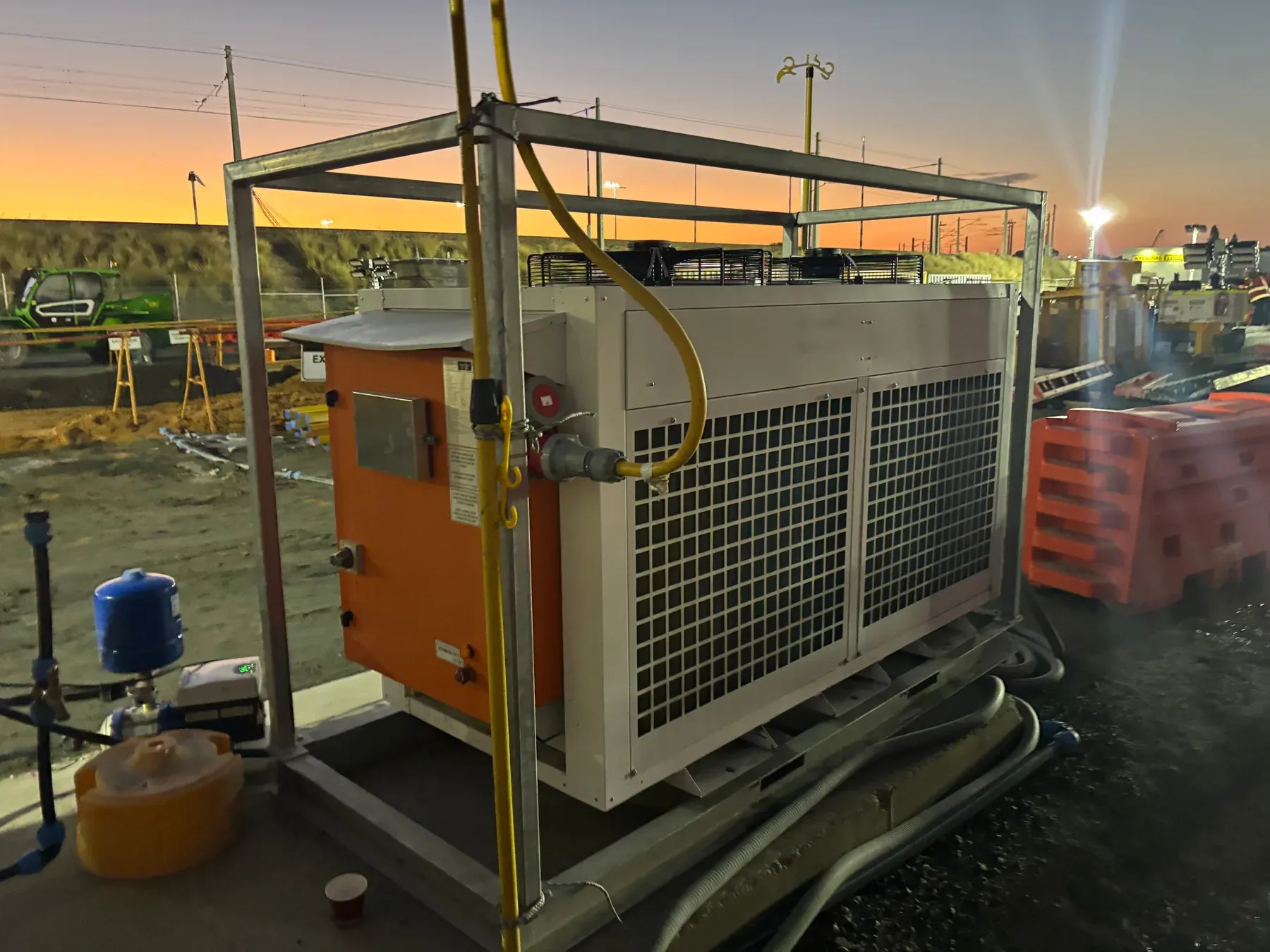
Air-cooled industrial water chillers cover 4 kW to 750 kW of cooling capacity, rated for 45 °C ambient with 52 °C achievable on request. They are the source of chilled water in this system, built for mine sites with lockable IP66 electrical enclosures, steel wire armoured external cabling and ELV controls.
The FS-S large capacity range produces very large volumes of cold water for duties such as mill presses, safety showers and waste product cooling.
Heat exchangers
Plate Heat Exchangers — Gasketed
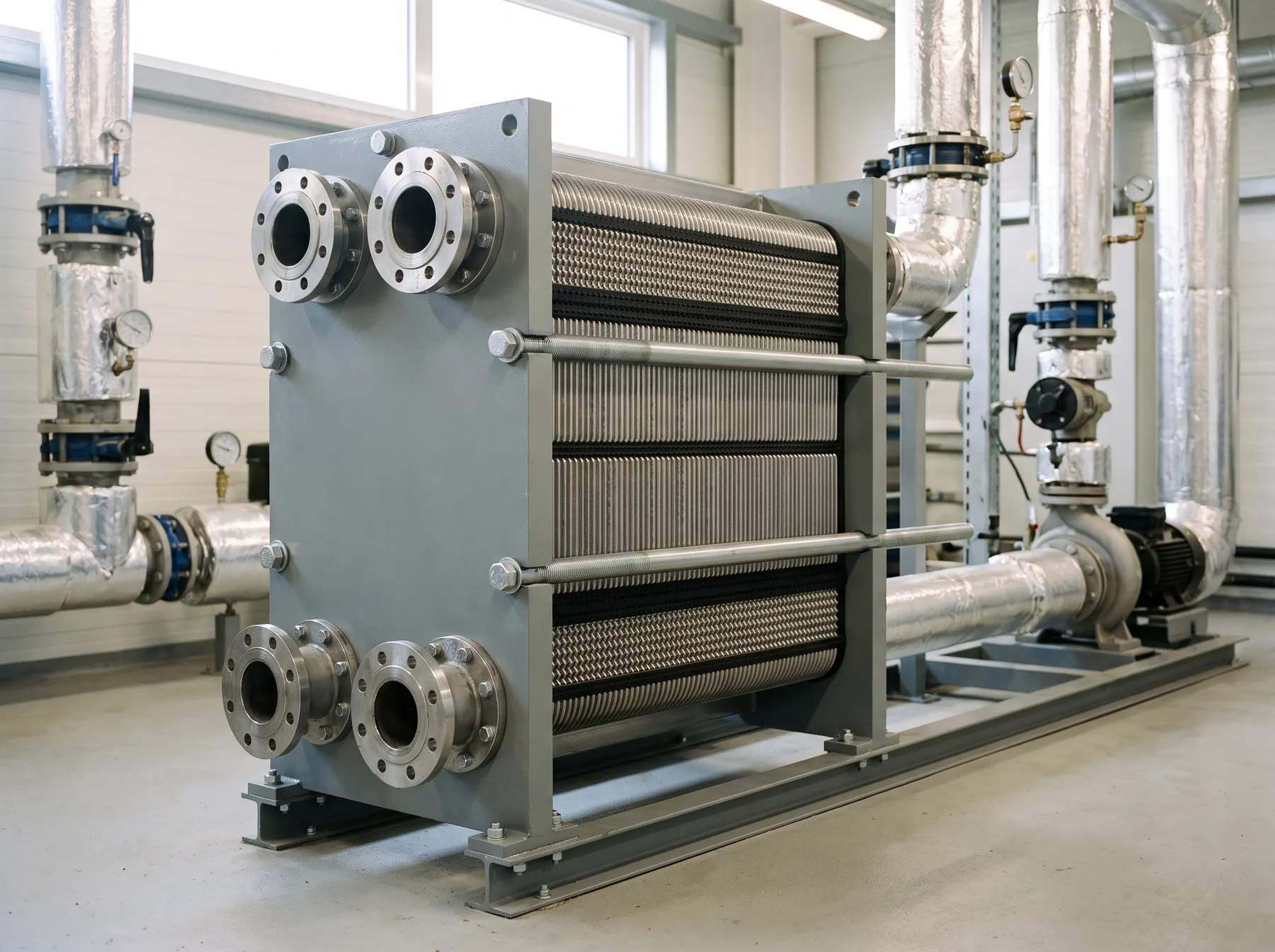
Gasketed plate heat exchangers transfer heat between the chilled water loop and the process, and are built for serviceability: the plate pack opens for cleaning and re-gasketing.
They operate from full vacuum to 64 bar and from 0 °C to 225 °C, with plates in stainless, 254 SMO, titanium and nickel alloys to suit the process fluid. Rugged semi-welded units are available for tough processes.
Heat exchangers
Shell & Tube Heat Exchangers
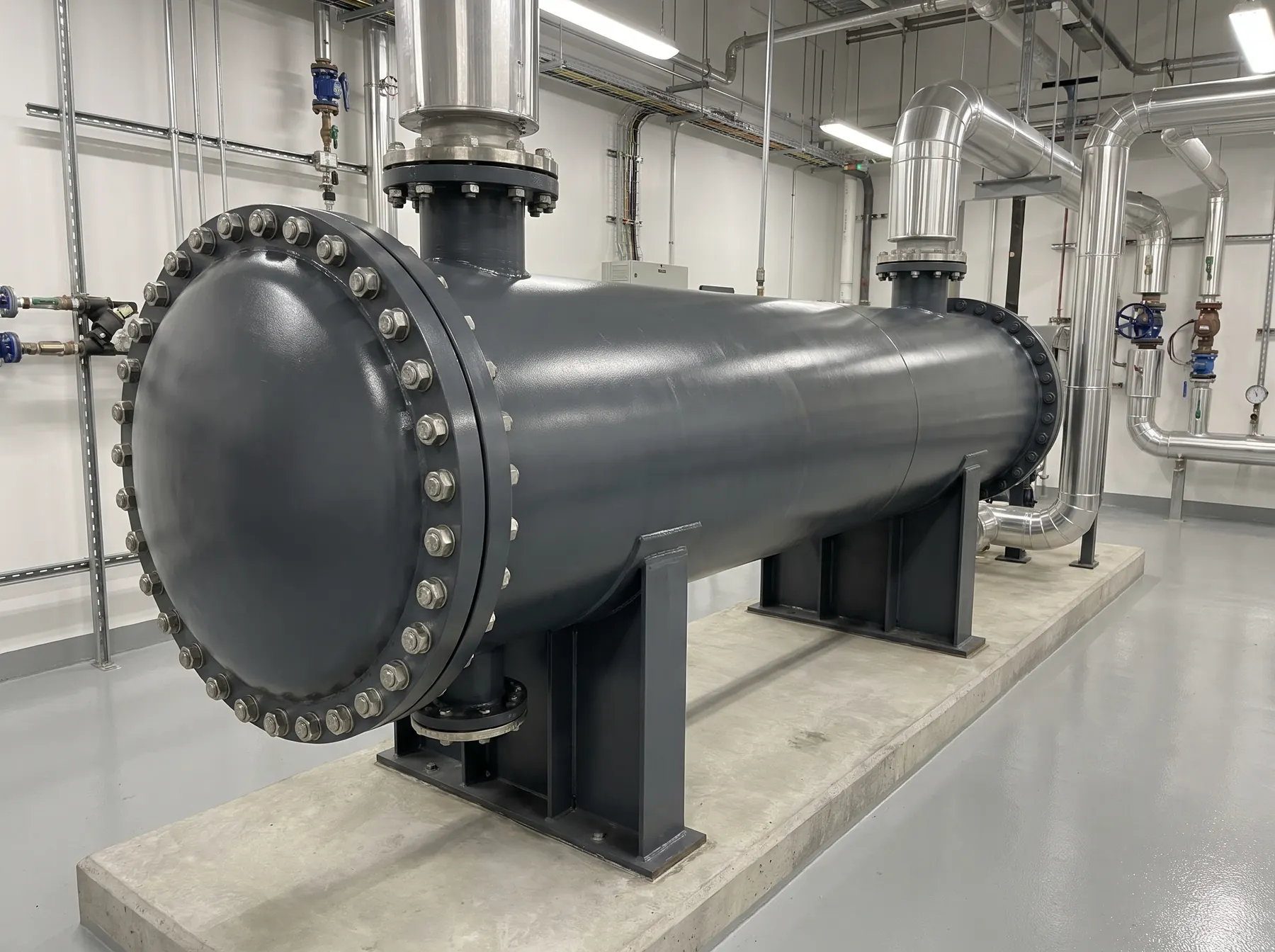
Shell and tube heat exchangers cover water-to-water duties as well as water-cooled, seawater and oil-cooled condensers and dry-type, flooded and falling film evaporators, in single to four circuit arrangements.
In an industrial cooling system they take the duties a plate pack is not suited to. The listed series run from 10 kW to 1,250 kW, and they can be supplied on custom skid packages with pumps, controls and thermal storage tanks.
Applications
Where industrial & mining cooling systems are used
Mine sites
Remote, high ambient sites where equipment has to survive heat, dust and corrosive air. Coated coils and stainless steel cabinets are available for coastal and sulphur-bearing sites. Projects include a coal loading plant and nickel mining in Queensland.
Processing plants
Mill presses, safety showers and waste product cooling: duties that need large volumes of cold water, delivered reliably.
Industrial process cooling
Process loops that need water held at a set temperature. With the close tolerance option, a hot gas bypass valve or compressor VFD, a standard tolerance of ±0.5 °C is achievable depending on load.
Questions
Industrial & Mining Cooling FAQs
How hot can it be on site?
The chillers are rated to operate comfortably in 45 °C ambient environments, and 52 °C is achievable on request.
What happens if a chiller or the power supply fails?
Chillers can be arranged in tandem or N+1, with redundant duty-cycled pumps, and a pump UPS terminal set keeps cold water flowing if the 3-phase supply fails.
Why not run process water straight through the chiller?
Process water often carries solids, chemicals or oil that would foul or damage the chiller's evaporator. A heat exchanger keeps the chiller on its own clean, closed loop, and the exchanger is the part that gets opened and cleaned.
Can the equipment handle corrosive or hazardous sites?
Coated coils and stainless steel cabinets are available for coastal salt spray and sulphur-bearing mine sites. Where flammable gas is present an Ex or ATEX rated unit may be required, so tell us the site's hazardous area classification when you enquire.
Talk to an engineer
Tell us about the site and the duty
Where the site is, the ambient it sees, what needs cooling and how much. We'll work the selection through with you and come back with a system and a price.
Rather talk it through? (02) 8710 8106