
Solutions · Commercial hot water
Commercial hot water systems for hotels, hospitals, aged care and apartments
Electric heat pump hot water plant: CO₂ or air-to-water heat pumps, storage tanks and brazed plate heat exchangers, selected together and sized to the building's peak demand so the plant room works as one system.
In this system
For hotels, hospitals, aged care and apartment buildings.
What the system includes
How the plant room works as one system
A commercial hot water plant has three jobs: make the heat, store it, and deliver it to the building when the draw-off comes. Each component here does one of those jobs, and they are sized against each other rather than one at a time.
- 1
Heat pumps make the heat
CO₂ or air-to-water heat pumps run steadily through the day, sized against the building's daily hot water demand rather than its busiest minute. Several units can run as one plant for capacity and redundancy.
- 2
Storage carries the peaks
Hotels, hospitals and apartment buildings draw most of their hot water in a few short peaks. Storage tanks hold hot water ready ahead of those peaks, so the heat pumps don't have to be sized for them.
- 3
Stratified storage feeds the heat pump cold water
Hot water sits at the top of a tank and cold water settles at the bottom. Drawing the heat pump's inlet from the bottom and returning hot water to the top keeps the layers apart. That matters most for a CO₂ heat pump, which heats water across a large temperature lift and works best when the water reaching it is cold.
- 4
Heat exchangers keep circuits apart
Where the heating circuit and the water the building draws must stay separate, a brazed plate heat exchanger moves the heat between them, for example from a heat pump primary loop into the storage circuit.
Heat pumps
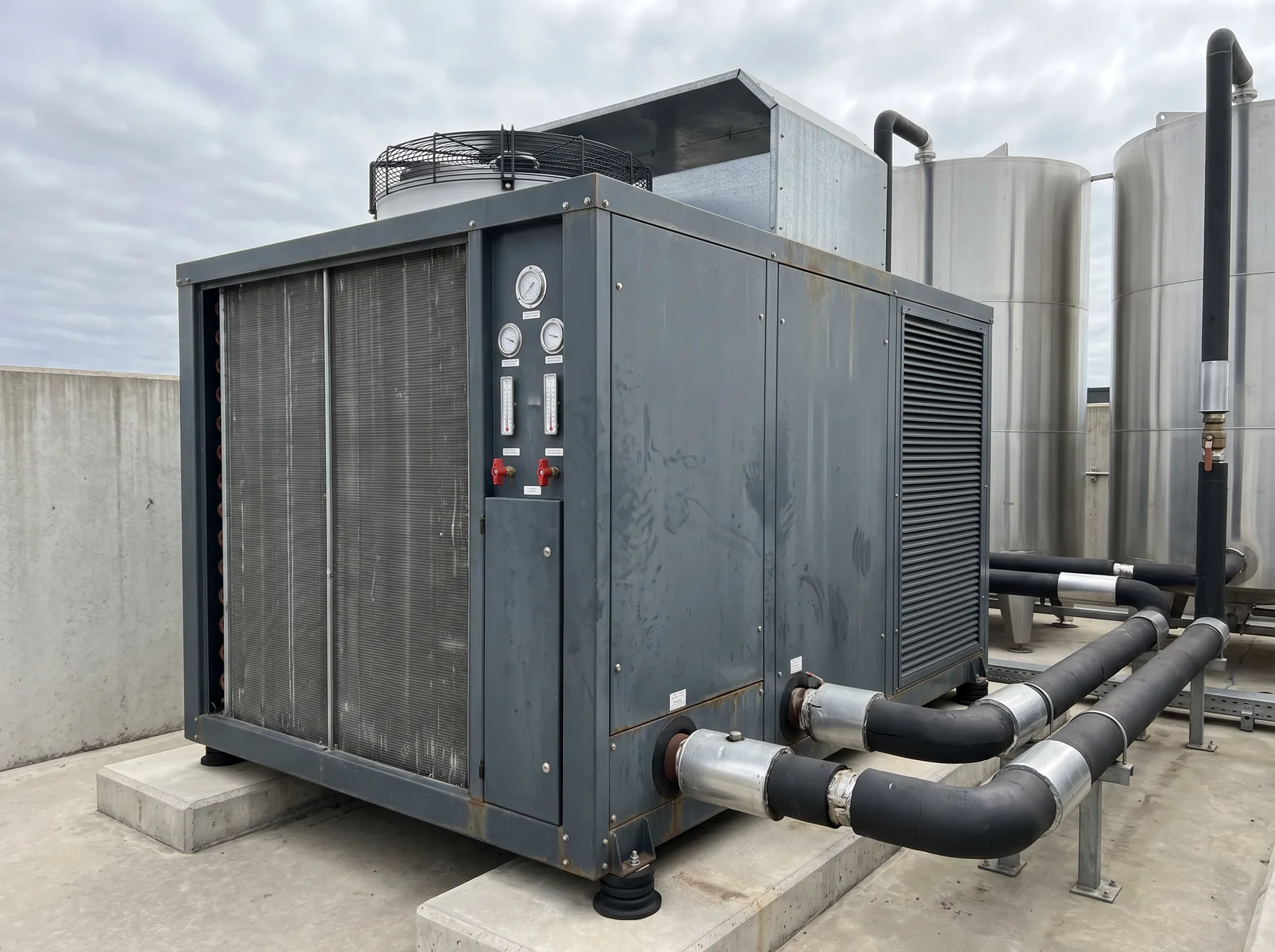
CO₂ Heat Pumps
CO₂ heat pumps run on the natural refrigerant R744 (ODP 0, GWP 1) and produce outlet water from 40 °C up to 95 °C, from inlet water between 5 °C and 55 °C.
In this system they are the high-temperature heat source, charging storage with water drawn from the cold bottom of the tank. They are air-source machines rated for ambient temperatures from −35 °C to 45 °C.
Heat pumps
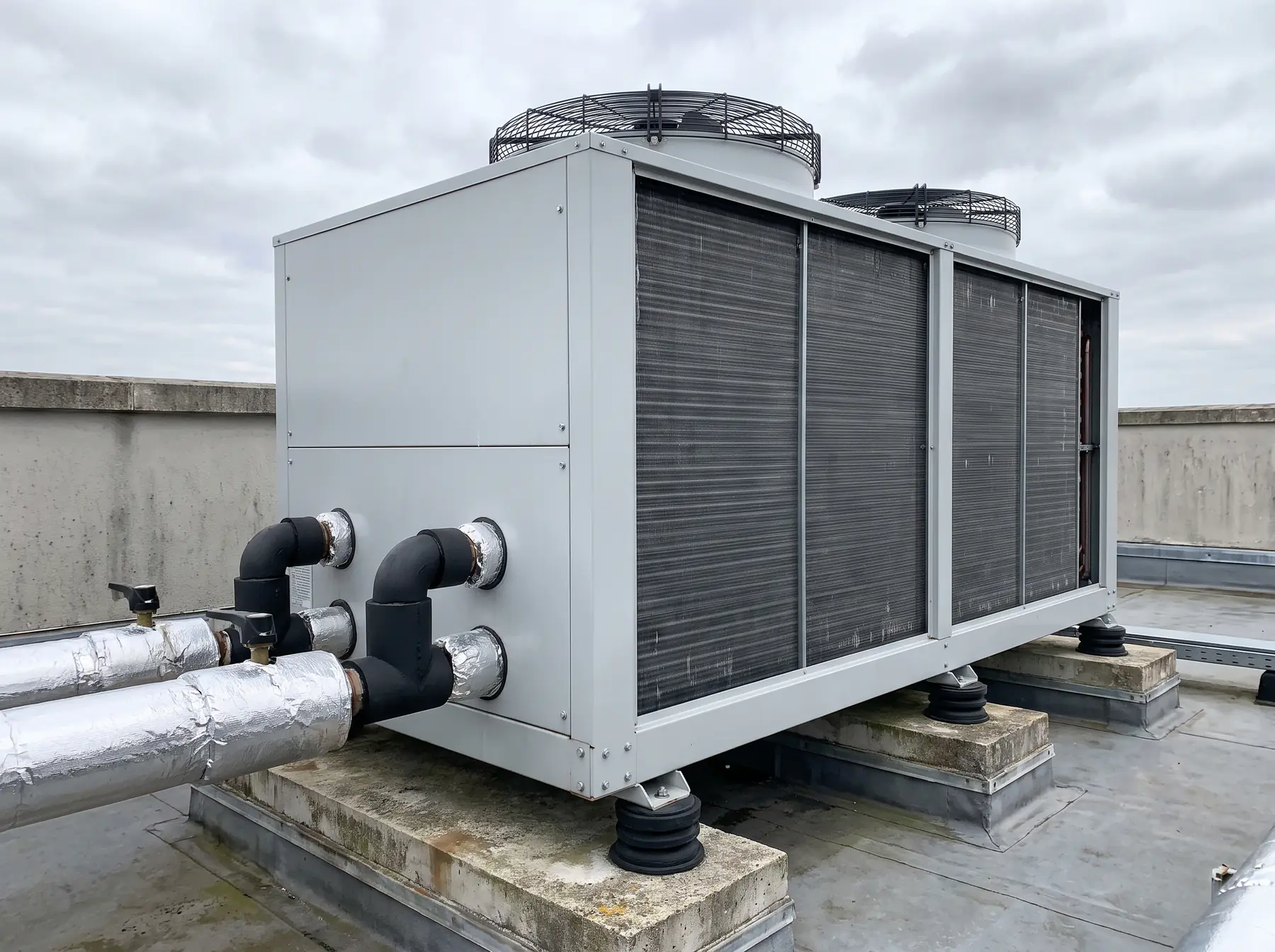
Hot Water Heat Pumps — Air to Water
Air-to-water hot water heat pumps cover 5 to 200 kW of heating capacity on R134a, for water temperatures up to 65 °C.
In a building hot water plant, master and booster heat pumps charge the storage tanks, and a master controller can run up to eight heat pumps together. Tandem or N+1 wiring lets the lead unit manage duty cycling and keep control if one unit develops a fault, and the plant connects to the BMS over Modbus, SNMP or BACnet.
Thermal storage
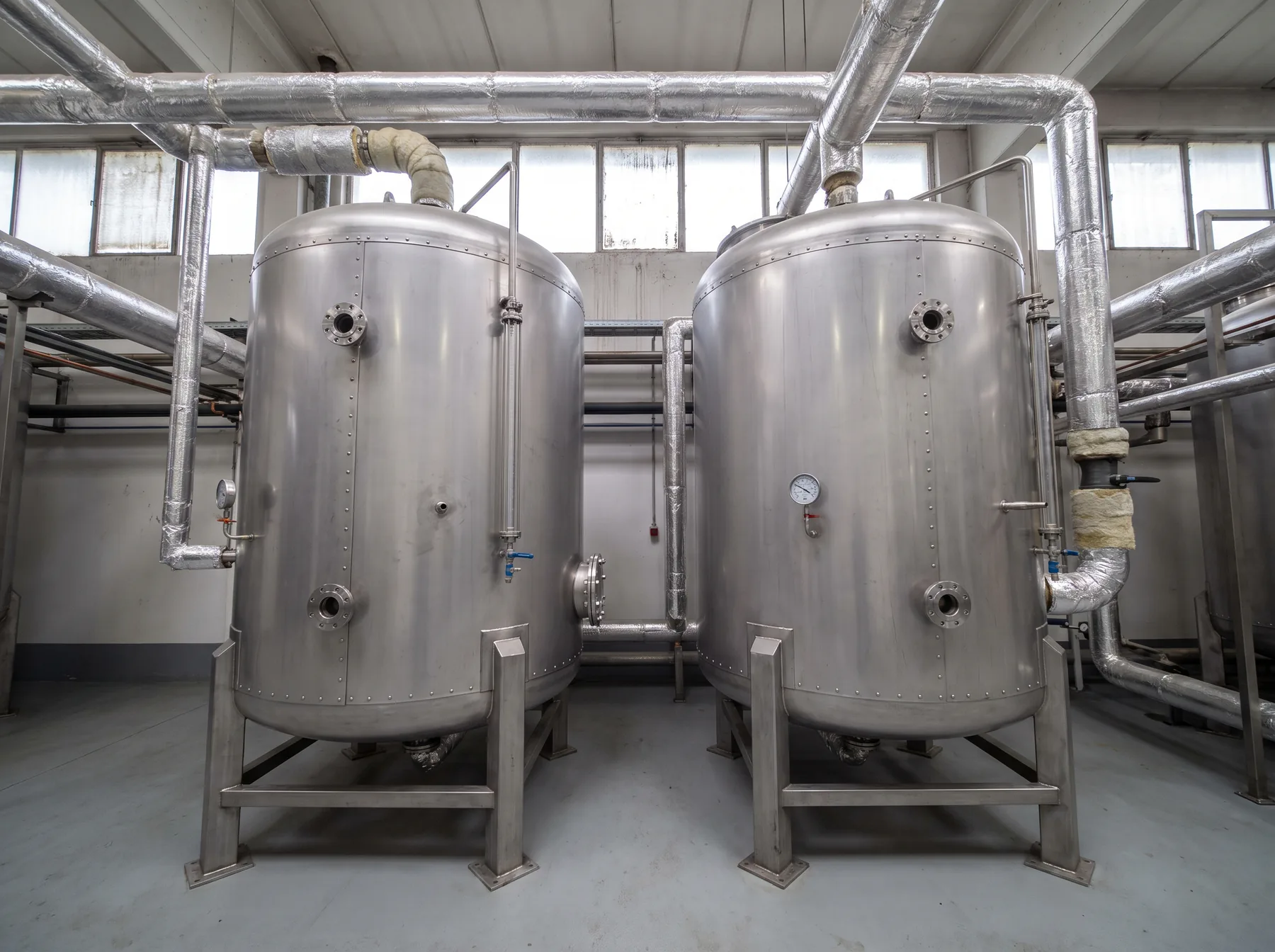
Water Tanks
Commercial direct hot water tanks (calorifiers), commercial indirect tanks with an enamel-coated double copper coil, and buffer tanks are the storage side of the system.
The listed enamel-lined and coil tanks come in 1,000 to 5,000 L with 80 mm polyurethane insulation, and tanks can be piped together to give the building the stored volume it needs.
Heat exchangers
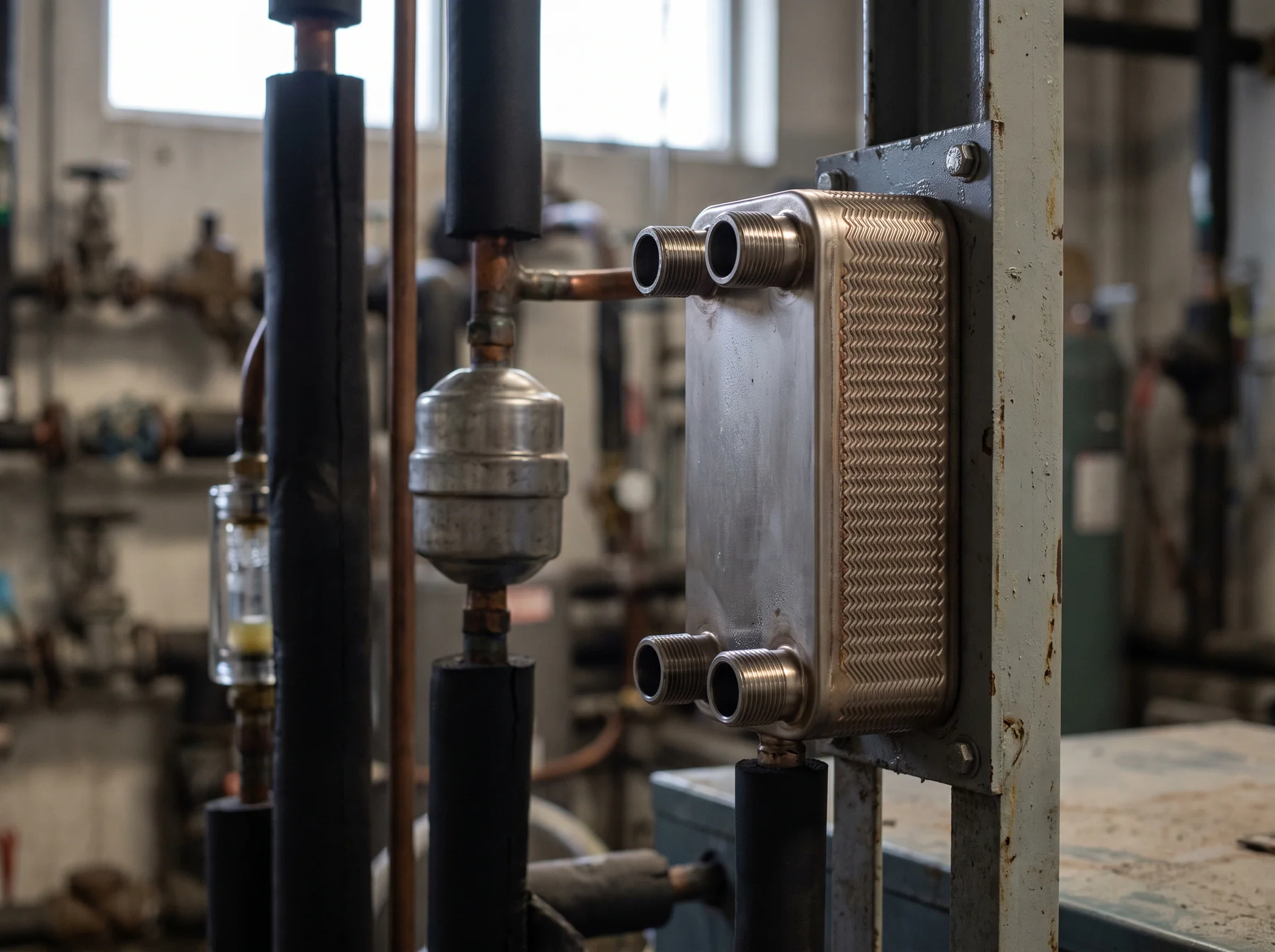
Brazed Plate Heat Exchangers
Brazed plate heat exchangers are compact, self-contained units for single-phase water-to-water duties.
In a hot water plant they transfer heat from a heat pump or primary loop into a separate circuit, keeping the two waters apart. The range runs from 6-plate to 200-plate configurations, with connections up to DN150.
Applications
Where commercial hot water systems are used
Hotels
Guest showers bunch into morning and evening peaks, with laundry and kitchens on top. Storage is sized to the peaks, the heat pumps to the day.
Hospitals
Hot water is needed around the clock and an outage is not an option. Several heat pumps on one master controller, wired for N+1, keep the plant running if a unit faults.
Aged care
Bathing, laundry and kitchens follow a daily routine that is predictable but busy. The plant is sized to that routine, with storage covering the bathing peaks.
Apartment buildings
Many households drawing hot water at the same times of day. Central heat pump plant with shared storage serves the building from one plant room or rooftop.
Questions
Commercial Hot Water FAQs
CO₂ or air-to-water heat pump: which suits our building?
They are different machines. CO₂ heat pumps run on R744 and deliver outlet water from 40 °C up to 95 °C. Air-to-water hot water heat pumps run on R134a and deliver water up to 65 °C, across a 5 to 200 kW range. The right one depends on the temperature the building needs, how cold the water returning to the heat pump is, and the space and power in the plant room. We select against your duty.
Why does the system need storage tanks?
Buildings draw most of their hot water in short peaks. Storage holds hot water ready for those peaks, so the heat pumps can be sized to the day's demand and run steadily instead of chasing the busiest minute. Stratified storage also keeps cold water at the bottom of the tank for the heat pump's inlet.
Can several heat pumps run as one plant?
Yes. On the air-to-water range a master controller can control up to eight heat pumps, and units can be wired for tandem or N+1 operation so the lead unit manages duty cycling. BMS connection is by dry contacts for master run and fault, or Modbus, SNMP and BACnet over Ethernet without a gateway.
What do you need from us to size the system?
The building type and size (rooms, beds or apartments), the hot water temperature you need, when the peaks happen, what plant is there now, and the space and power available. We work the selection through with you before a price is issued.
Talk to an engineer
Tell us about the building
The building type and size, the hot water temperature it needs and what is in the plant room now. We'll work the selection through with you and come back with a system and a price.
Rather talk it through? (02) 8710 8106